Do high-visibility garments need to come from the same manufacturer?
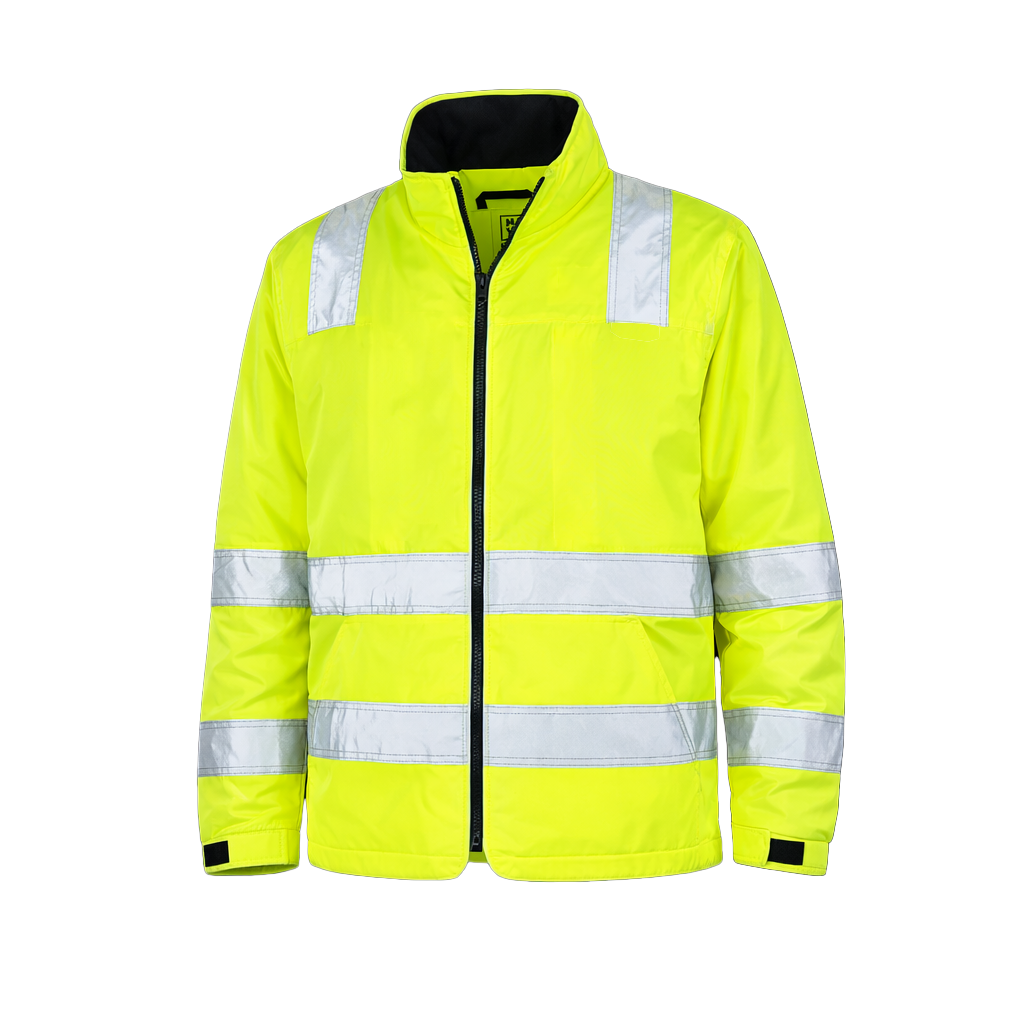
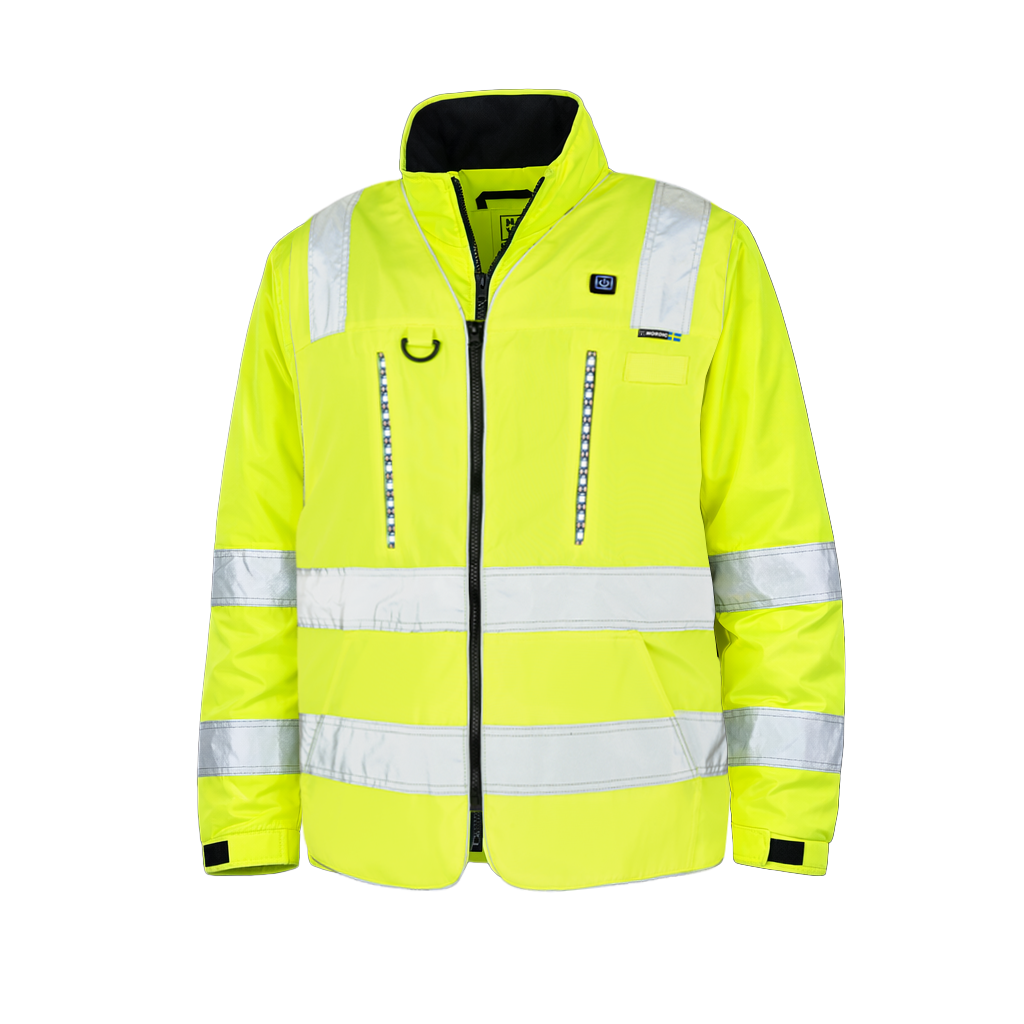
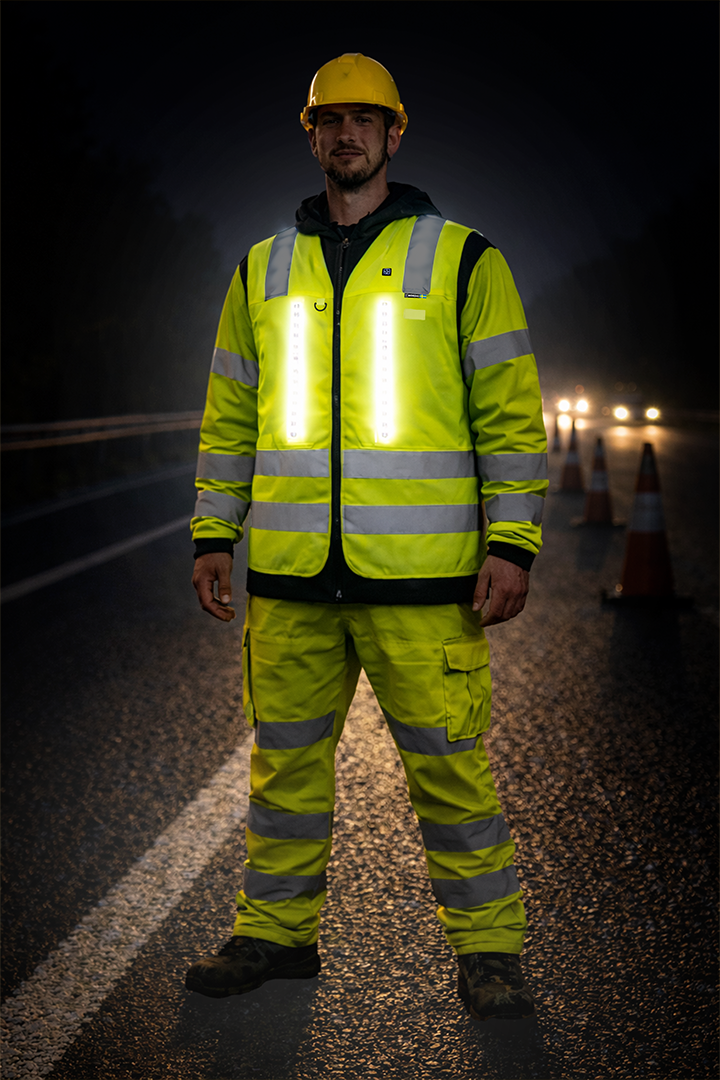
No. Our LED safety vest is Class 2. Combined with other garments, you achieve Class 3. The standard is based on visibility, not closed systems.
EN ISO 20471 is the standard for high-visibility clothing.
It ensures that people are visible in high-risk environments such as roads, construction, and industry.
The standard is based on how much material is present and how it is positioned, not on which garments are combined or who the manufacturer is.
Class 3 means
sufficient fluorescent surface area
sufficient reflective surface area
360° visibility
reflective strips over the shoulders
clear body outline
EN ISO 20471
Class 1
Class 2
Class 3
Fluorescent material (m²)
0,14
0,50
0,8
Reflective material (m²)
0,10
0,13
0,20
Combination of garments
Since Class 3 is based on material surface area, a single garment is not always enough, especially in smaller sizes.
The standard therefore allows multiple garments together to meet the requirements.
The logic is simple: If the surface area and placement of the reflective material are correct, it is Class 3.
Below are examples that clearly show how certified garments in combination achieve Class 3.
Combined with winter jacket
A. Upper garment (Class 3)
+
B. LED safety vest (Class 2, smallest size)
=
Class 3
A.
B.
Combined (A−B+B)
Fluorescent material (m²)
0,8
0,516
0,8
Reflective material (m²)
0,2
0,142
0,2
Combined with long-sleeved T-shirt
A. Upper garment (Class 3)
+
B. LED safety vest (Class 2, smallest size)
=
Class 3
A.
B.
Combined (A−B+B)
Fluorescent material (m²)
0,8
0,516
0,8
Reflective material (m²)
0,2
0,142
0,2
A restrictive interpretation
It is important to understand that some actors have introduced their own interpretation of combined garments, referred to as “Locked Combination Certification”.
Under this interpretation, garments must be tested together, come from the same manufacturer, and be sold as an “approved combination”.
That requirement does not exist in the standard.
What matters is that each garment is correctly certified and meets the requirements. Not who sells the combination.
This is something many customers experience as limiting.
In practice, the requirement is driven by how certain actors choose to interpret the standard, not by what is actually required to achieve Class 3.
Locked Combination Certification does not add visibility.
But it benefits manufacturers.
Locked combination:
Anti-competitive Limits freedom of choice and locks customers to one supplier
Increased costs Requires new purchases instead of using existing garments
Reduced flexibility Makes it harder to adapt to weather and work tasks
Restricts innovation New solutions risk being excluded despite better functionality
Focus on certification instead of real safety Practical visibility becomes secondary
Increased complexity More administration and more difficult procurement processes
Read more about the benefits of PPE with active light
Nej. Vår LED-väst är klass 2. Kombinerad med andra plagg uppnår du klass 3. Standarden bygger på synbarhet, inte låsta system.
EN ISO 20471 är standarden för varselkläder.
Den säkerställer att personer syns i riskmiljöer som väg, bygg och industri.
Standarden bygger på hur mycket material som finns och hur det är placerat, inte på vilka plagg som kombineras eller vem som är tillverkare.
Klass 3 innebär
tillräcklig flourescerande yta
tillräcklig reflexyta
360° synbarhet
reflex över axlar
tydlig kroppskontur
EN ISO 20471
Klass 1
Klass 2
Klass 3
Flourescerande material (m²)
0,14
0,50
0,8
Reflekterade material (m²)
0,10
0,13
0,20
Kombination av plagg
Eftersom Klass 3 bygger på materialmängd, så räcker inte alltid ett enskilt plagg, särskilt i mindre storlekar.
Standarden tillåter därför att flera plagg tillsammans uppnår kraven.
Logiken är enkel: Finns ytan med rätt placering av reflexerna, då är det Klass 3.
Nedan är exempel som tydligt visar att certifierade plagg i kombination uppnår klass 3.
Kombinerat med vinterjacka
A. Överdel (klass 3)
+
B. LED-väst (klass 2, minsta storlek)
=
Klass 3
A.
B.
Kombinerat (A−B+B)
Flourescerande material (m²)
0,8
0,516
0,8
Reflekterande material (m²)
0,2
0,142
0,2
Kombinerat med t-shirt
A. Överdel (klass 3)
+
B. LED-väst (klass 2, minsta storlek)
=
Klass 3
A.
B.
Kombinerat (A−B+B)
Flourescerande material (m²)
0,8
0,516
0,8
Reflekterande material (m²)
0,2
0,142
0,2
En hämmande tolkning
Viktigt att känna till är att vissa aktörer har infört en egen tolkning av kombinerade plagg som kallas för "Samcertifiering". Då ska plagg vara testade tillsammans, komma från samma tillverkare och säljas som en “godkänd kombination".
Det kravet finns inte i standarden.
Det som avgör är att varje plagg är korrekt certifierat och uppfyller kraven. Inte vem som säljer kombinationen.
Detta något som kunderna upplever som begränsande. Kravet drivs i praktiken av hur vissa valt att tolka standarden, inte av vad som faktiskt krävs för att uppnå klass 3.
Samcertifiering tillför inget till synbarheten. Men det gynnar tillverkarna.
Samcertifiering (låst kombination):
Konkurrenshämmande Begränsar fria val och låser kunder till en leverantör
Ökade kostnader Kräver nyinköp istället för att använda befintliga plagg
Minskad flexibilitet Försvårar anpassning efter väder och arbetsmoment
Hämmar innovation Nya lösningar riskerar att uteslutas trots bättre funktion
Fokus på certifikat framför verklig säkerhet Synbarhet i praktiken blir sekundär
Ökad komplexitet Mer administration och svårare inköpsprocesser